The unknown is what makes IVF feel daunting. Once you know what's coming, week by week, it becomes much more manageable. Here's exactly what an IVF cycle looks like at Srishti SAFE — from the first phone call to the pregnancy test.
A typical fresh-cycle IVF takes about 4-6 weeks from baseline visit to embryo transfer. Each phase has its own rhythm.
Pre-cycle (the weeks before you start)
Before stimulation begins, we want a clear baseline. This phase often happens 2-4 weeks before the cycle starts.
- Comprehensive consultation — your full history, partner's history, prior reports reviewed.
- Hormonal blood panel — AMH, FSH, LH, TSH, prolactin, oestradiol on day 2-3 of a cycle if possible.
- Pelvic ultrasound — antral follicle count, uterine assessment, ovarian morphology.
- Partner's semen analysis — to decide whether ICSI is needed.
- Infection screening — HIV, hepatitis B & C, syphilis (mandatory under ART rules).
- Lifestyle and supplement optimisation — folic acid for you, sometimes CoQ10/zinc for him, dietary advice, exercise.
- Written treatment plan and cost estimate — line-by-line.
- Sometimes a "priming" cycle — using oral contraceptives or oestrogen patches in the weeks before to time everything.
Week 1: Baseline and stimulation start
The cycle officially begins on day 2 or 3 of your menstrual period.
- Baseline ultrasound — confirms the ovaries are quiet, no functional cysts, the uterine lining is thin (as expected at this stage).
- Blood test — confirms baseline hormone levels.
- Stimulation begins — daily subcutaneous injections of FSH (gonadotropin). We teach you how to self-inject; it's easier than it sounds.
- Possibly a second medication — to prevent premature ovulation (GnRH antagonist or agonist).
How you might feel: a bit bloated by day 4-5; mildly tender ovaries; mood shifts in some women. Nothing dramatic if dosing is right.
Week 2: Stimulation + monitoring scans
This is the busiest week — usually 3-4 visits.
- Monitoring scans (every 1-2 days) — checking follicle growth in both ovaries.
- Blood tests — usually oestradiol levels to confirm follicle response.
- Dose adjustments — sometimes we add or change drugs based on response.
- Trigger injection — once the lead follicles are around 17-20mm, an hCG or Lupron trigger is given. This precisely times the egg retrieval, typically 34-36 hours later.
How you might feel: more bloated, ovaries tender. Light exercise is fine; heavy lifting and high-impact sports we'd avoid. Don't drive yourself to the trigger night or retrieval day.
Day of retrieval (Week 2 or early Week 3)
The single procedural day.
- You'll fast from midnight before.
- The procedure takes 15-20 minutes, done under brief general anaesthesia (you'll be asleep).
- A thin needle, guided by ultrasound, is passed through the vaginal wall into each follicle. Fluid is aspirated, embryologists examine it under the microscope, and mature eggs are collected.
- You'll wake up in recovery within 30-45 minutes.
- You'll be told how many eggs were collected before you leave.
- Your partner provides a fresh semen sample the same morning.
- You go home the same day. Rest, light food, no strenuous activity for 24-48 hours.
How you might feel: mild abdominal cramping, slight spotting, bloating for 1-2 days. Significant pain or fever needs an immediate call.
Days 1-5 after retrieval: embryology
You rest at home; the lab does the work.
- Day 0 (retrieval day): Eggs are inseminated with sperm (conventional IVF) or injected with a single sperm each (ICSI).
- Day 1: Embryologist checks for fertilisation — typically 60-80% of mature eggs fertilise normally.
- Day 3: Embryos should be at the 6-8 cell stage. Lab updates you with progress.
- Day 5-6: The best embryos reach blastocyst stage. Lab grades them and shares the report.
Embryo transfer (Week 3)
The transfer itself is quick and painless — like a Pap smear with one extra step.
- Performed with a full bladder (better ultrasound view).
- No anaesthesia needed.
- A thin catheter places 1-2 embryos into the uterine cavity under ultrasound guidance.
- 10 minutes start to finish.
- You rest in the recovery room for 20-30 minutes, then go home.
Many cycles now use "freeze-all" — instead of fresh transfer, all embryos are vitrified (frozen) and transferred in a separate cycle (FET) when your body is in a calmer state. Often better outcomes, especially if your hormone levels are very high after stimulation.
Weeks 3-5: The two-week wait
The hardest part. Nothing visible is happening, but everything important is.
- You'll be on progesterone support (vaginal pessaries or injections) to maintain the lining.
- Resist the urge to home pregnancy test early — false negatives and false positives both happen.
- 14 days after transfer (or 9 days after a day-5 transfer): a blood beta-hCG test confirms or rules out pregnancy.
- If positive, we repeat in 48 hours to check the rise. If negative, we plan a debrief.
How you might feel: anxious, hopeful, scared, distracted. All normal. Try to keep your usual routines; engage in things outside fertility; lean on people you trust.
If positive: early pregnancy monitoring
From positive test through 12 weeks of pregnancy:
- Beta-hCG monitoring twice in the first week to confirm normal rise.
- First scan around 6-7 weeks to confirm intrauterine pregnancy and heartbeat.
- Routine antenatal care begins — usually with us through first trimester, then transitioned (or continued) for full obstetric care.
If negative: regroup
One cycle is rarely a verdict. We schedule a sit-down to review everything — egg quality, fertilisation, embryo development, lining, timing — and identify what to change for the next attempt.
Most cycles that succeed do so within 1-3 attempts. If you've had three carefully run cycles without success, that's the moment to step back and rethink the whole plan, not just adjust drug doses.
Things that might surprise you
- How many short clinic visits are needed — IVF is a series of small touch-points rather than one big event.
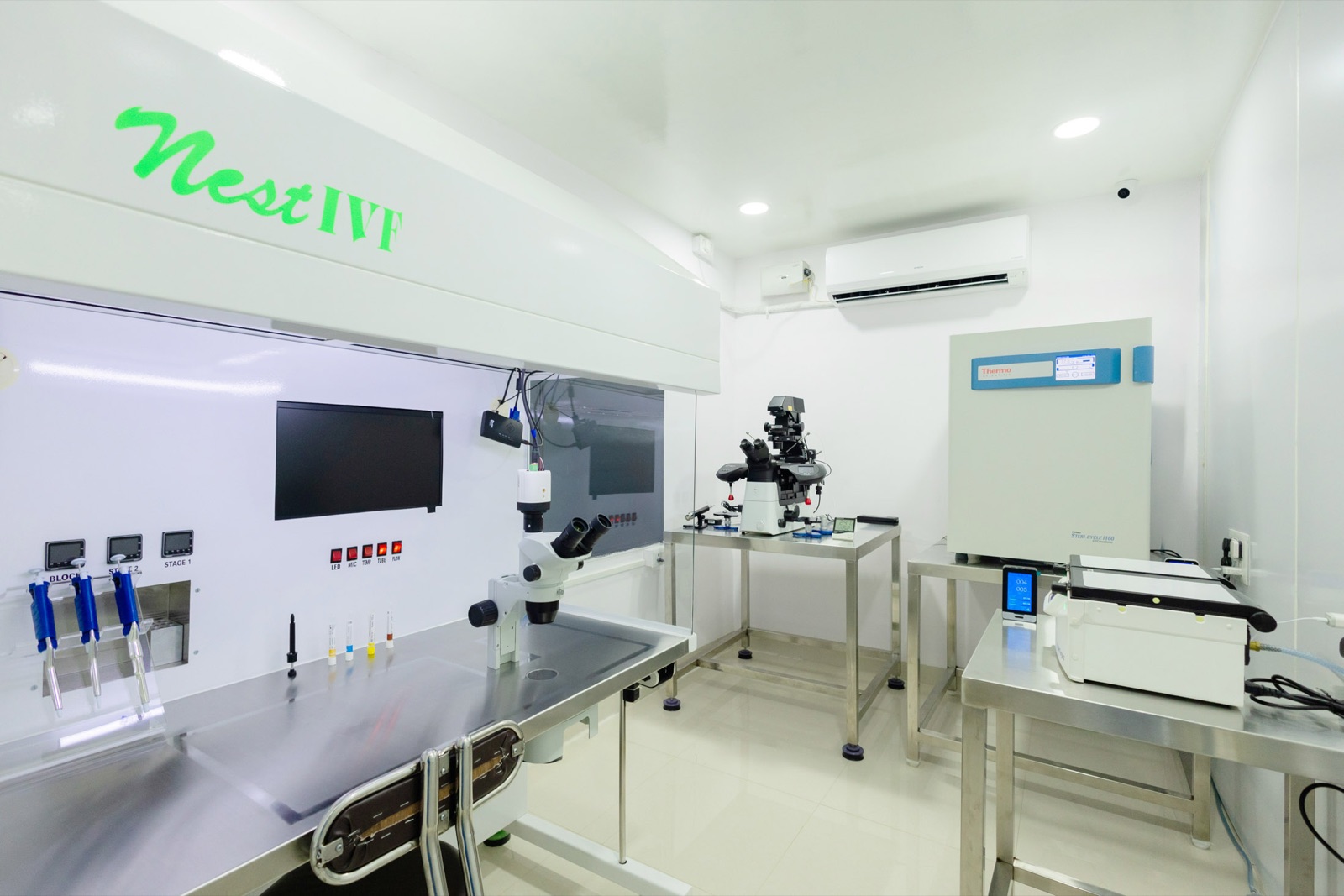
- How calm the lab actually is — the work is precise, quiet, methodical.
- How much time we spend explaining as you go. You won't be in the dark.
- How normal it feels to keep working/living during stimulation (most patients do).
If you're considering IVF, the best preparation is a single consultation where we walk through your specific situation. Knowing what's coming is half the battle.