
Endometriosis Treatment in Hubli
Specialist diagnosis, laparoscopic surgery and fertility planning for endometriosis — by senior gynecologists with deep endoscopy expertise. Your pain isn't normal. Let's name it.
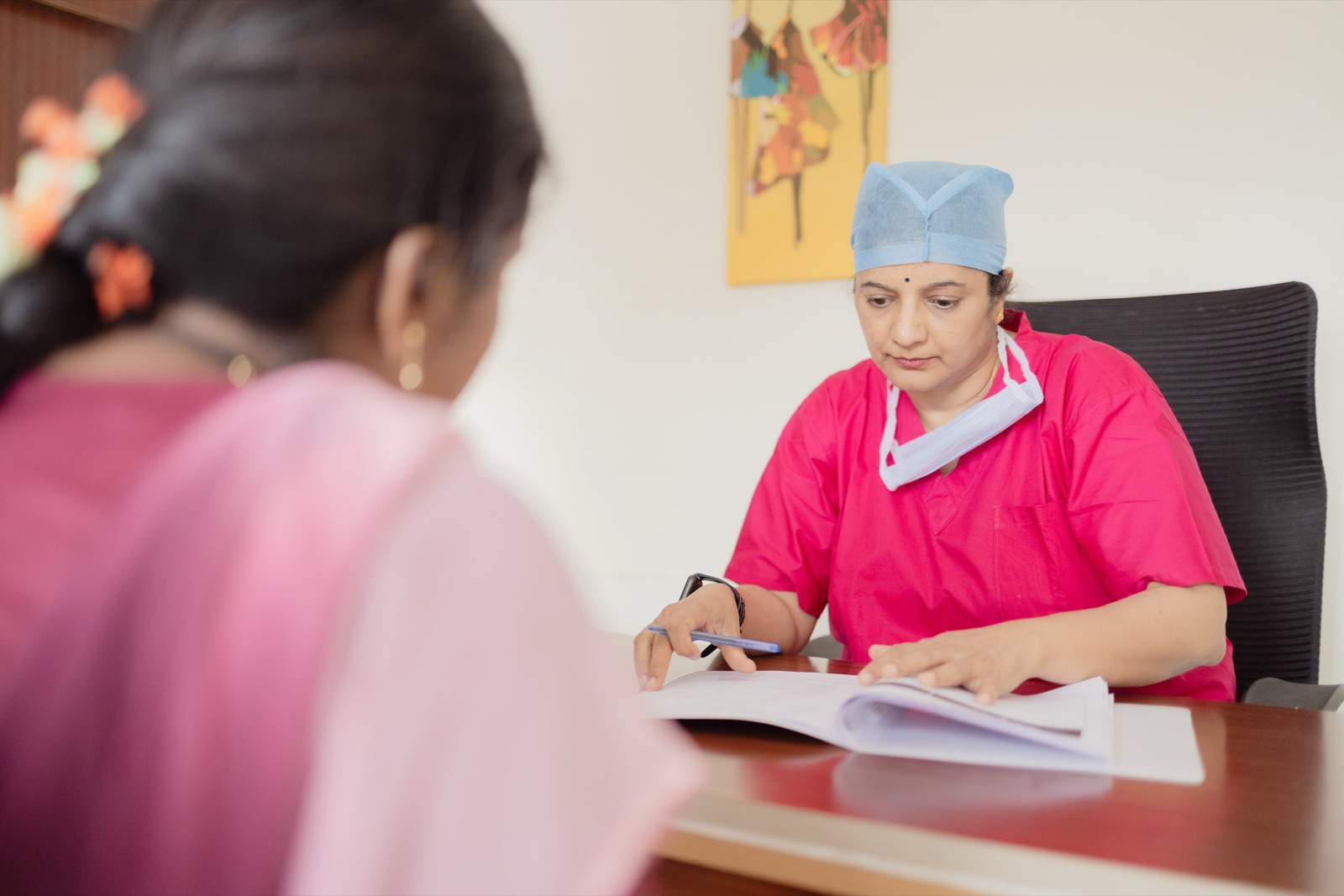
Tissue where it shouldn't be
Endometriosis is a condition where tissue similar to the uterine lining grows outside the uterus — typically on the ovaries, fallopian tubes, the outer surface of the uterus, pelvic peritoneum, bowel or bladder. This misplaced tissue still responds to monthly hormonal cycles, but unlike normal menstrual blood, it has nowhere to go.
The result is chronic inflammation, scarring, adhesions, and over time — significant effects on fertility and pelvic anatomy. It affects roughly 1 in 10 women of reproductive age, yet the average woman waits 7-10 years for a diagnosis.
Read our long-form blog post: Endometriosis and Fertility — What Every Woman Should Know →
Signs worth taking seriously
Severe period pain is not normal. If any of these sound familiar — particularly the first three — endometriosis is worth ruling out.
Severe period pain
Pain that needs medication every month, causes you to miss work or school, or doesn't respond to standard painkillers.
Chronic pelvic pain
Dull or sharp pelvic ache outside your period — sometimes daily, sometimes worse around ovulation.
Painful intercourse
Deep pain during or after sex, particularly in certain positions.
Heavy or prolonged periods
Soaking pads quickly, large clots, periods lasting more than 7 days, spotting between cycles.
Bowel or bladder symptoms
Pain on bowel movements or urination, especially during periods. Sometimes diarrhoea or constipation during your cycle.
Difficulty conceiving
Trouble getting pregnant after 6-12 months of trying. Sometimes the first symptom a woman notices.
How we confirm it
Endometriosis is often missed on routine investigations. A systematic diagnostic approach is essential.
Clinical history
Your symptom pattern is often more telling than any test. We spend time understanding the pain — its timing, severity, evolution.
Pelvic examination
A careful exam may reveal tender spots, nodules, or restricted mobility of the uterus and ovaries that suggest deep disease.
Imaging
Pelvic ultrasound detects endometriomas (chocolate cysts). MRI may be needed for deep infiltrating disease. Surface endometriosis often shows on neither.
Laparoscopy (when needed)
The gold standard — a minimally invasive procedure that lets us see, biopsy and often treat the disease in the same sitting.
Tailored to your priority
The right path depends on whether your immediate goal is pain control, fertility, or both. We plan accordingly.
Hormonal suppression
Combined oral contraceptives, progestins, GnRH analogues — pause the disease and provide pain relief. Best for women who don't want pregnancy currently.
Laparoscopic excision
Surgical removal of visible endometriosis, restoring anatomy and clearing adhesions. Improves both pain and natural fertility, particularly for moderate disease.
Endometrioma surgery
Careful removal of chocolate cysts on the ovary — a balance between removing disease and preserving ovarian reserve.
IVF
Often the most efficient path for severe disease, distorted anatomy, or when age limits the window for surgery-then-natural-conception strategies.
Pain management
NSAIDs, lifestyle adjustments (anti-inflammatory diet, exercise, stress management), and physiotherapy where helpful.
Long-term care
Endometriosis is chronic. We plan follow-up, monitor for recurrence, and adjust treatment as your life stage changes.
Endoscopic surgery plus fertility expertise — in the same clinic
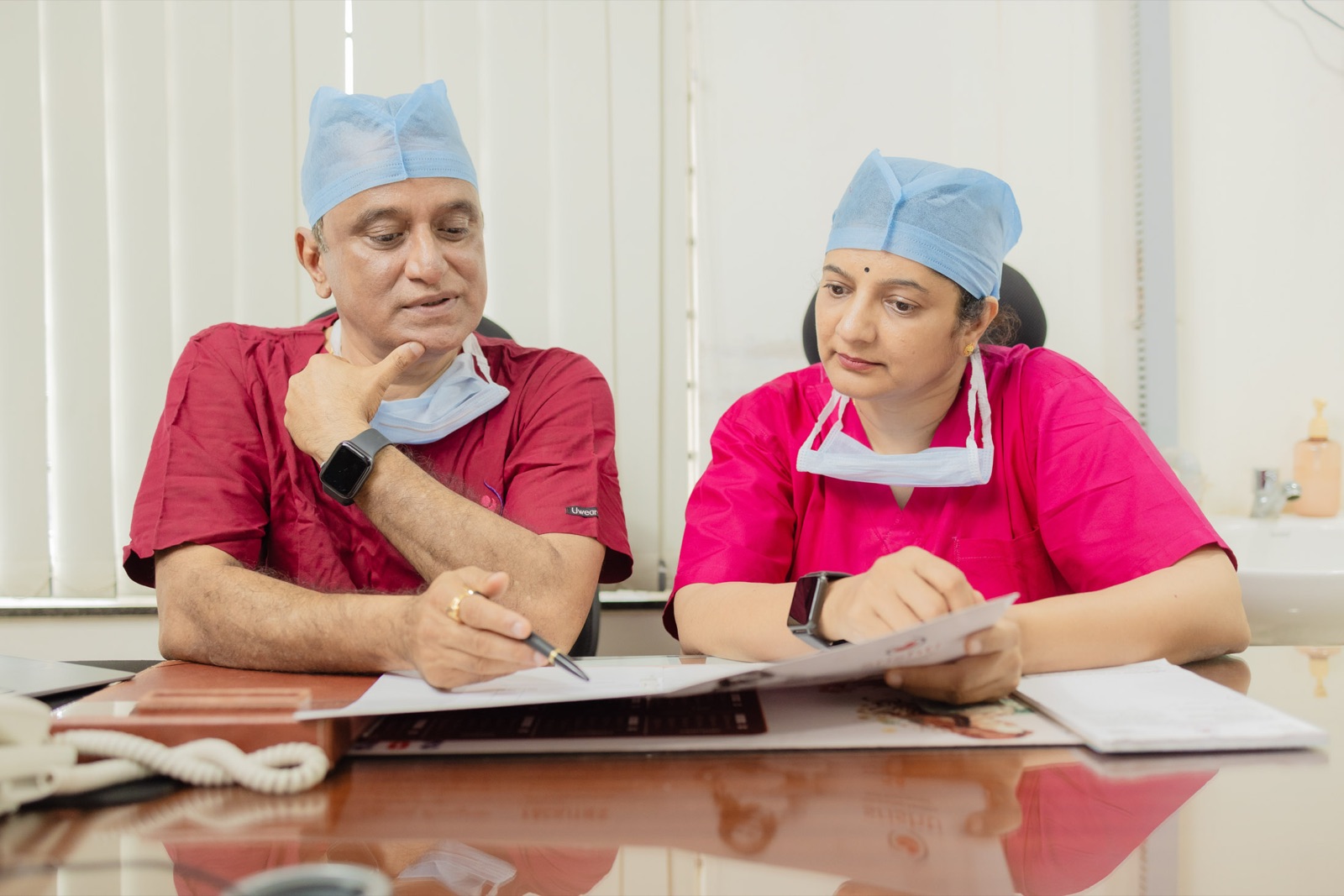
Both Dr. Shankar N. Bijapur and Dr. Priya Shankar hold Fellowships in Minimal Access Surgery, with formal training in gynecological endoscopy. We also run a full IVF programme. That combination matters for endometriosis care, where treatment decisions sit at the intersection of surgical and fertility planning.
A clinic with only fertility expertise may rush to IVF. A clinic with only surgical expertise may operate unnecessarily. We hold both perspectives — and choose the path that's right for your specific situation.
Read more about our doctors or our facilities.
Common questions about endometriosis
The most common first sign is severe period pain that disrupts daily life. Other early signs: heavy or prolonged periods, pain during intercourse, pelvic pain outside the period, painful bowel movements during periods. Difficulty conceiving is sometimes the first noticeable symptom.
Yes — many women with endometriosis conceive. About 30-50% experience some subfertility, but the right combination of surgical and/or fertility treatment helps most achieve pregnancy. Early diagnosis matters.
Yes — minimally invasive surgery has an excellent safety profile in experienced hands. Recovery is typically 1-2 weeks. Surgeon experience matters significantly for both safety and completeness of disease removal.
Recurrence is possible but not inevitable. Factors that reduce it: complete excision (not just ablation), post-surgical hormonal suppression for women not pursuing pregnancy, and early pregnancy when feasible. We plan for the long term, not just the surgery.
At Srishti SAFE, diagnostic laparoscopy starts around ₹45,000. Therapeutic procedures (extensive excision, complex cases) are typically ₹60,000–₹1,50,000 depending on complexity. See our pricing page for full breakdown.
If you've been told your period pain is "normal"...
It may not be. Book a consultation. One visit can either rule out endometriosis or finally name what you've been living with.
Book Appointment