
ICSI Treatment in Hubli
Intracytoplasmic Sperm Injection — for couples where male factor infertility means conventional IVF isn't enough. Used only when clinically indicated, never as a routine add-on.
One sperm. One egg. Directly injected.
In conventional IVF, eggs and sperm are placed together in a culture dish and fertilisation happens on its own — the way it does in the body. ICSI takes this one step further: a single, carefully selected sperm is injected directly into each mature egg using a fine glass micropipette, under high-magnification microscopy.
It's not a different treatment to IVF — it's an additional step within an IVF cycle, used when natural fertilisation in a dish is unlikely to succeed.
Used only when needed
We don't add ICSI as a default. Here are the situations where it's the right clinical choice — and a couple of situations where it isn't.
Severe male factor infertility
Low sperm count (oligozoospermia), poor motility (asthenozoospermia), or abnormal morphology (teratozoospermia) — particularly when these are moderate-to-severe.
Surgically retrieved sperm
For men with azoospermia (no sperm in ejaculate), sperm retrieved via TESA or micro-TESE has limited motility — ICSI is the only viable route.
Frozen sperm samples
Cryopreserved sperm often has reduced motility after thawing — ICSI compensates by directly injecting selected viable sperm.
Previous fertilisation failure
If a previous conventional IVF cycle had unexpectedly low fertilisation rates, ICSI is appropriate for the next attempt.
Very few eggs retrieved
When only 1-3 eggs are available, maximising the chance of fertilisation matters more — ICSI gives the best odds per egg.
PGT-A (genetic testing)
When embryos are to be tested for chromosomal abnormalities, ICSI is used to prevent stray sperm DNA from contaminating biopsy samples.
The places it shouldn't be a default
Some clinics add ICSI to every IVF cycle regardless of indication — often because the per-cycle cost is higher with ICSI bundled in. At Srishti SAFE, we don't. Conventional IVF is the right choice when:
- Male parameters are within normal range — sperm count, motility and morphology are adequate.
- Female factor infertility is the primary issue — tubal blockage, ovulation problems, endometriosis without male factor.
- Unexplained infertility with normal semen — conventional IVF gives equivalent results without the extra cost.
If you've been quoted for IVF+ICSI but male parameters were normal, please ask why. There may be a good reason — but there should always be a reason.
The procedure
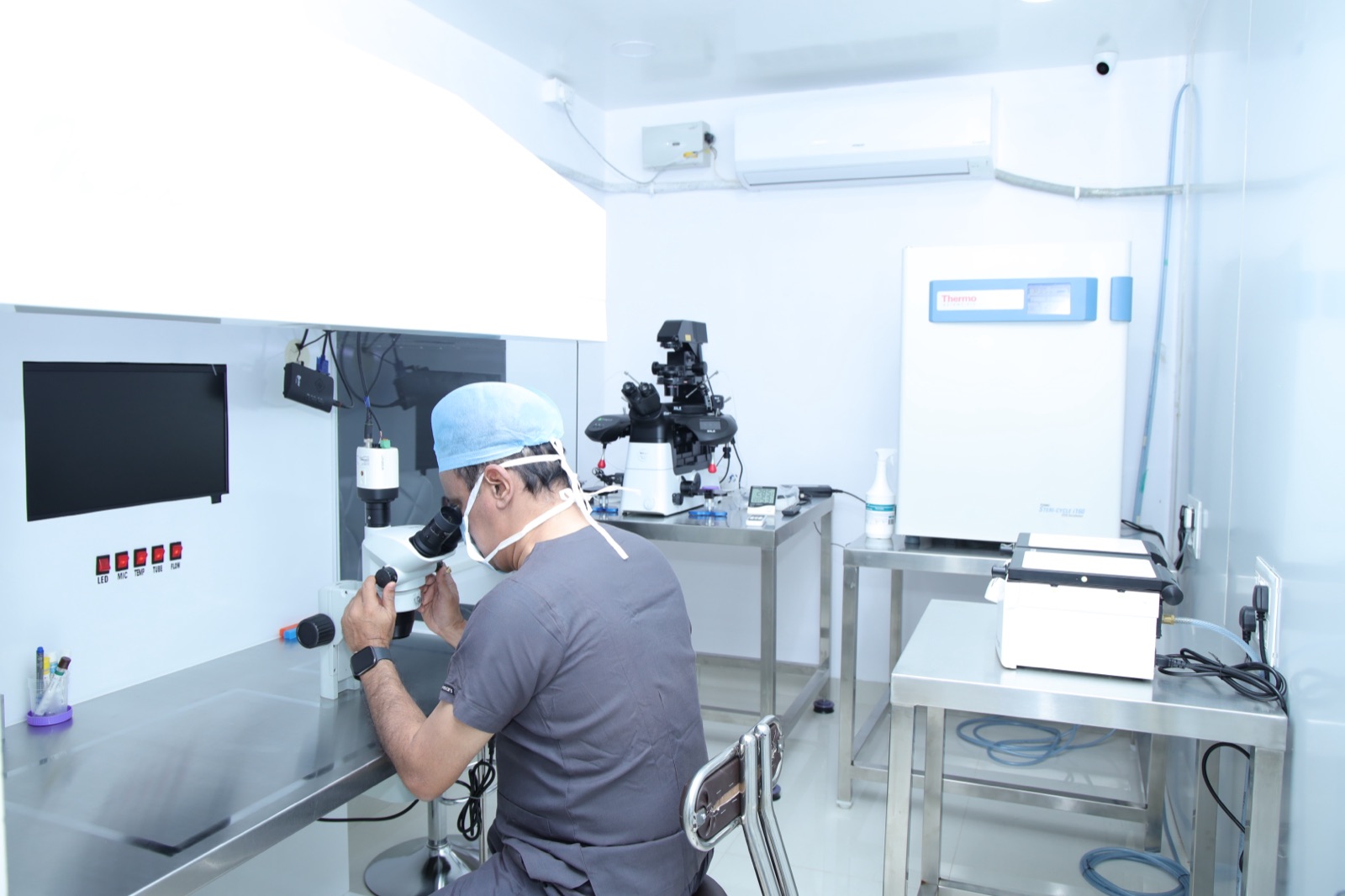
Everything below happens in our embryology lab on the same day as egg retrieval — you don't experience any additional procedure.
Eggs retrieved & assessed
After your egg retrieval procedure, our embryologists examine each egg and identify those that are mature and suitable for ICSI.
Sperm selection
From your partner's processed semen sample, embryologists identify motile, morphologically normal sperm one by one under high magnification.
The injection
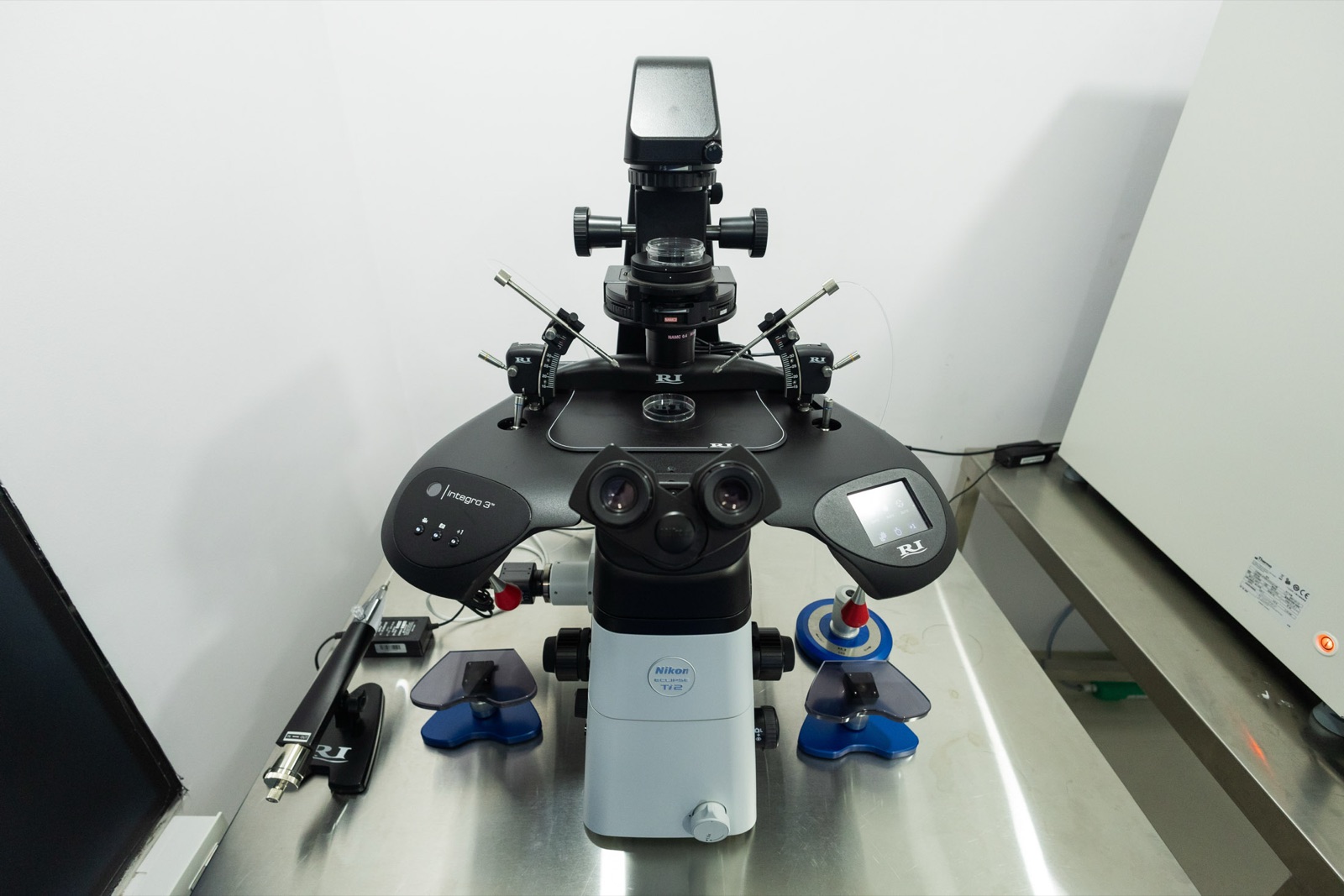
Using our Nikon RI Integro 3 ICSI workstation, the embryologist holds the egg with a fine pipette and injects a single sperm directly into the egg cytoplasm with a needle thinner than a human hair.
Embryo culture & transfer
Fertilisation is checked next morning. From there, the cycle continues exactly like a standard IVF cycle — embryo culture for 3-5 days, then transfer or freezing.
Lab quality matters more with ICSI
Modern micromanipulation station
Nikon RI Integro 3 ICSI workstation — the same equipment used in leading IVF labs internationally.
Senior embryology team
ICSI is operator-dependent. Our embryologists have hundreds of ICSI procedures of experience — accuracy and gentle handling translate directly to embryo quality.
Controlled lab environment
HEPA-filtered air, stable temperature and pH, low-volatile-compound construction. Embryos are extremely sensitive to environmental stress.
Transparent recommendation
We only recommend ICSI when there's a clinical reason. You'll know the reason in writing, before you commit.
Common questions about ICSI
In conventional IVF, eggs and sperm are placed together and fertilisation happens naturally. In ICSI, a single sperm is directly injected into each egg. ICSI is added to IVF when male factor is significant — it doesn't replace IVF, it's an extra step.
ICSI is typically an add-on of ₹20,000–30,000 to a standard IVF cycle cost of ₹1.5–2.5 lakh — so a full IVF+ICSI cycle is usually ₹1.7–2.8 lakh. See our full pricing page.
Fertilisation rates of 60-80% per mature egg are typical when ICSI is appropriately indicated. Pregnancy rates depend more on female age and embryo quality than on ICSI itself.
Decades of follow-up data on ICSI-conceived children show generally reassuring outcomes. Some studies suggest a small increase in certain conditions — but the underlying male factor infertility may itself contribute. Discuss specifics with us during your consultation.
No. ICSI happens inside an IVF cycle — eggs still need to be retrieved, and embryos still need to be cultured and transferred. ICSI is a step within IVF, not an alternative.

ICSI or conventional IVF — which is right?
Book a consultation. We'll review your reports, advise honestly, and quote ICSI only if it's indicated for your situation.
Book Appointment